
Contact and spacing
Find a repeatable forehand contact point
Improve tennis forehand contact by understanding spacing, ball height and how your grip changes the ideal hitting zone.
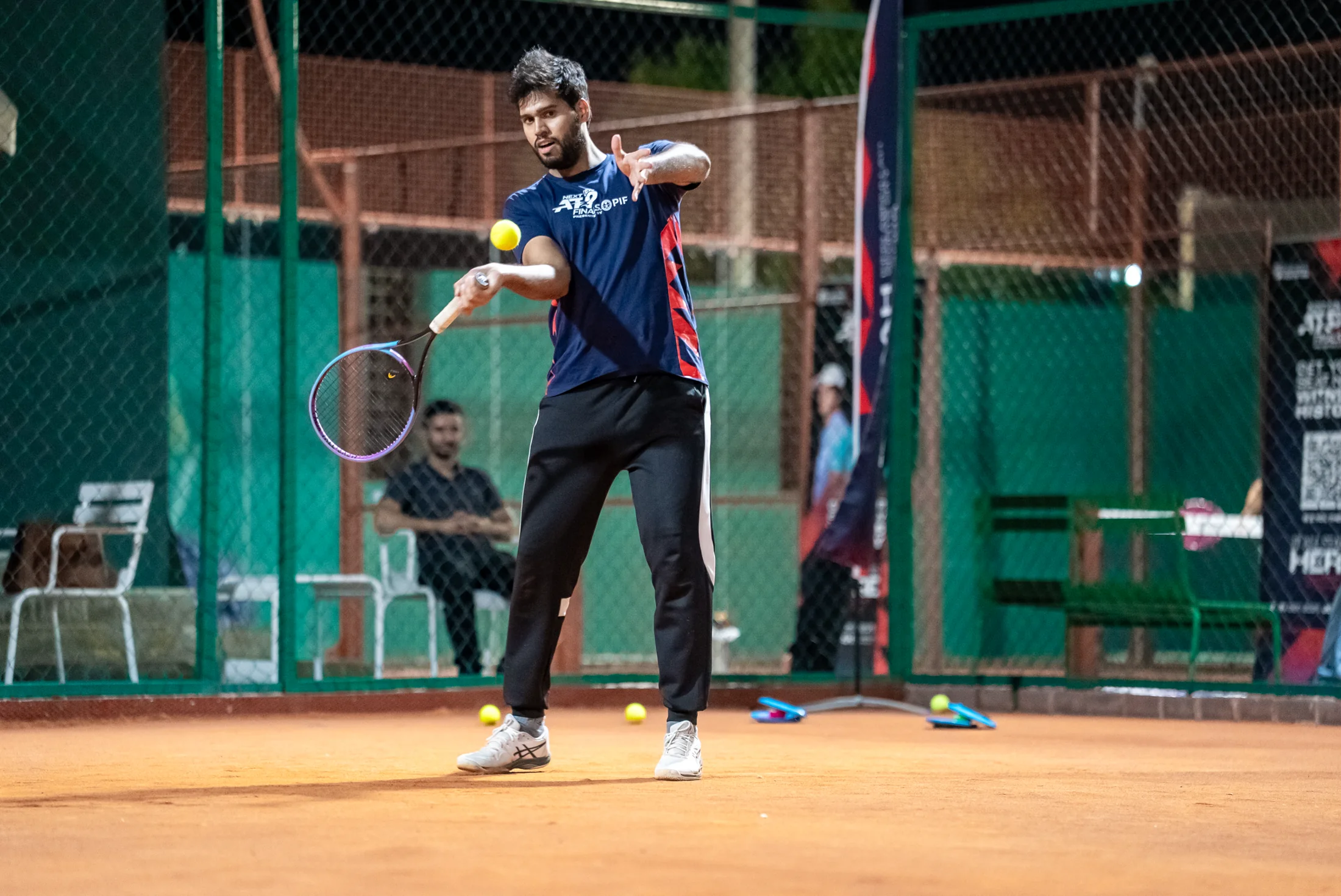
Contact is a moving zone shaped by your grip and the incoming ball, but it should consistently leave the arm room to accelerate.
Contact is a moving zone shaped by your grip and the incoming ball, but it should consistently leave the arm room to accelerate.
Think zone, not single dot
No player meets every ball at an identical coordinate. Height, speed and spin change the useful contact location. Your goal is a manageable zone in front and beside the body where the racquet face can stay controlled.
Your grip changes the zone
More conservative grips often feel comfortable closer to the body and on lower balls. More rotated grips usually prefer contact farther forward and higher. Technique advice has to match the grip actually being used.
Footwork creates contact
Most contact problems begin before the swing. Move early, then use small steps to fine-tune distance. Reaching and crowding are opposite errors, but both remove the arm's freedom.
Read the result
Late contact often sends the ball toward the outside of the intended target. Crowded contact may produce a jammed or sharply pulled ball. Use the flight as feedback, then adjust the body before changing the hand.
Try this on court
Drop-feed contact map
Use gentle self-feeds to locate a comfortable strike zone.
- Drop the ball at three distances from the body.
- Swing at the same moderate speed each time.
- Mark which distance gives the cleanest direction and balance.
- Add a live feed and move to recreate that spacing.
Common questions
Questions players ask
How far in front should forehand contact be?
Far enough that the arm can swing freely, but the exact distance depends on your grip, stance and ball height.
Why do I hit the forehand late?
Late preparation, slow recognition and insufficient adjustment steps are more common causes than slow arm speed.
A guide can give you the right idea; individual feedback identifies which part matters for your game. Explore private tennis coaching in Riyadh or learn what happens in a first private tennis class.
Train with direction
Turn information into improvement.
Reading helps. Focused feedback helps faster. Hammad coaches adults and kids in English, with every session adapted to the player.