
Forehand control
Why your tennis forehand sprays—and how to control it
A practical guide to forehand direction, spacing and racquet-face control for tennis players who miss to both sides.
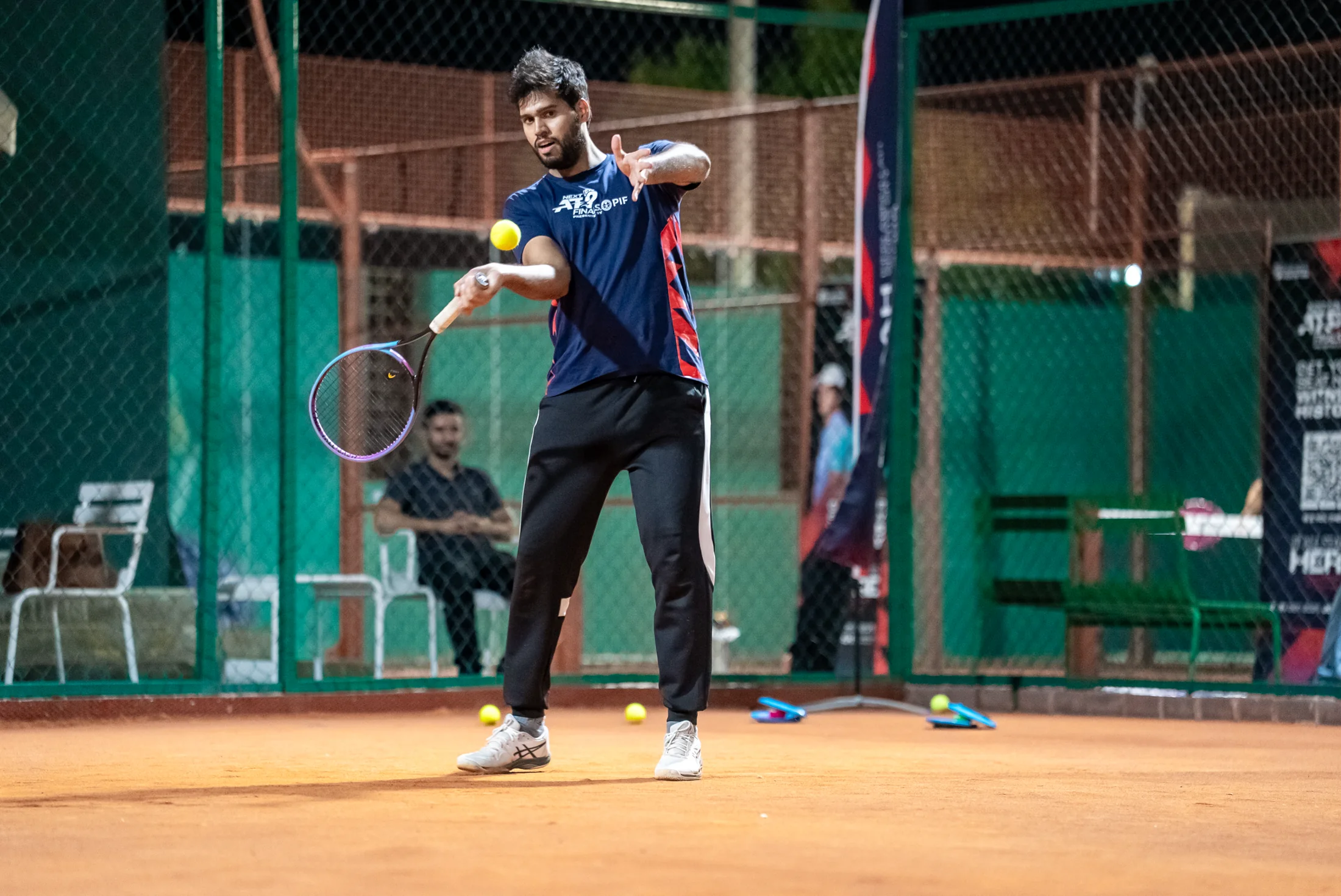
Direction becomes easier when your spacing, contact height and swing intention stay consistent from ball to ball.
Direction becomes easier when your spacing, contact height and swing intention stay consistent from ball to ball.
Start with the pattern of the miss
A forehand that misses in every direction rarely needs more effort. It needs a more repeatable relationship between your body, the ball and the racquet face. Notice whether the ball changes direction because contact is late, because you crowd the bounce or because the hand changes the racquet face at the last moment.
Track ten forehands instead of judging one. A pattern gives you something useful to coach; a single miss often does not.
Give the ball enough space
When the ball gets too close, the elbow and wrist have to improvise. Move early enough to create room beside the body, then use smaller adjustment steps as the ball approaches. Good spacing does not mean reaching. It means arriving where the arm can swing without being trapped.
Separate direction from power
Choose a large cross-court target and swing at a pace you can repeat. Hold the target for several balls before increasing speed. If accuracy disappears as soon as you accelerate, reduce the speed slightly and keep the same finish.
Control the racquet face through contact
The racquet does not need to remain perfectly vertical, but it should not be rescued by a last-second wrist movement. Use a comfortable grip, relaxed hand and continuous swing. The path creates shape; a stable face gives the ball a predictable starting direction.
Try this on court
Three-lane forehand drill
Divide the opposite court into wide, middle and inside lanes.
- Hit five controlled balls to the middle lane.
- Move the target cross-court without adding pace.
- Finish with five inside-out forehands while keeping the same spacing.
- Record where each miss starts, not only where it lands.
Common questions
Questions players ask
Why does my forehand miss both long and into the net?
The contact point and racquet face are probably changing between repetitions. Stabilise spacing and swing speed before making a larger technical change.
Should I slow my forehand down?
Temporarily reducing pace can help you establish direction, but the goal is a smooth repeatable swing rather than steering the ball.
A guide can give you the right idea; individual feedback identifies which part matters for your game. Explore private tennis coaching in Riyadh or learn what happens in a first private tennis class.
Train with direction
Turn information into improvement.
Reading helps. Focused feedback helps faster. Hammad coaches adults and kids in English, with every session adapted to the player.