
Attacking tennis
How to attack a slow tennis ball without overhitting
Turn slow and short tennis balls into controlled attacks by improving movement, spacing, net clearance and recovery.
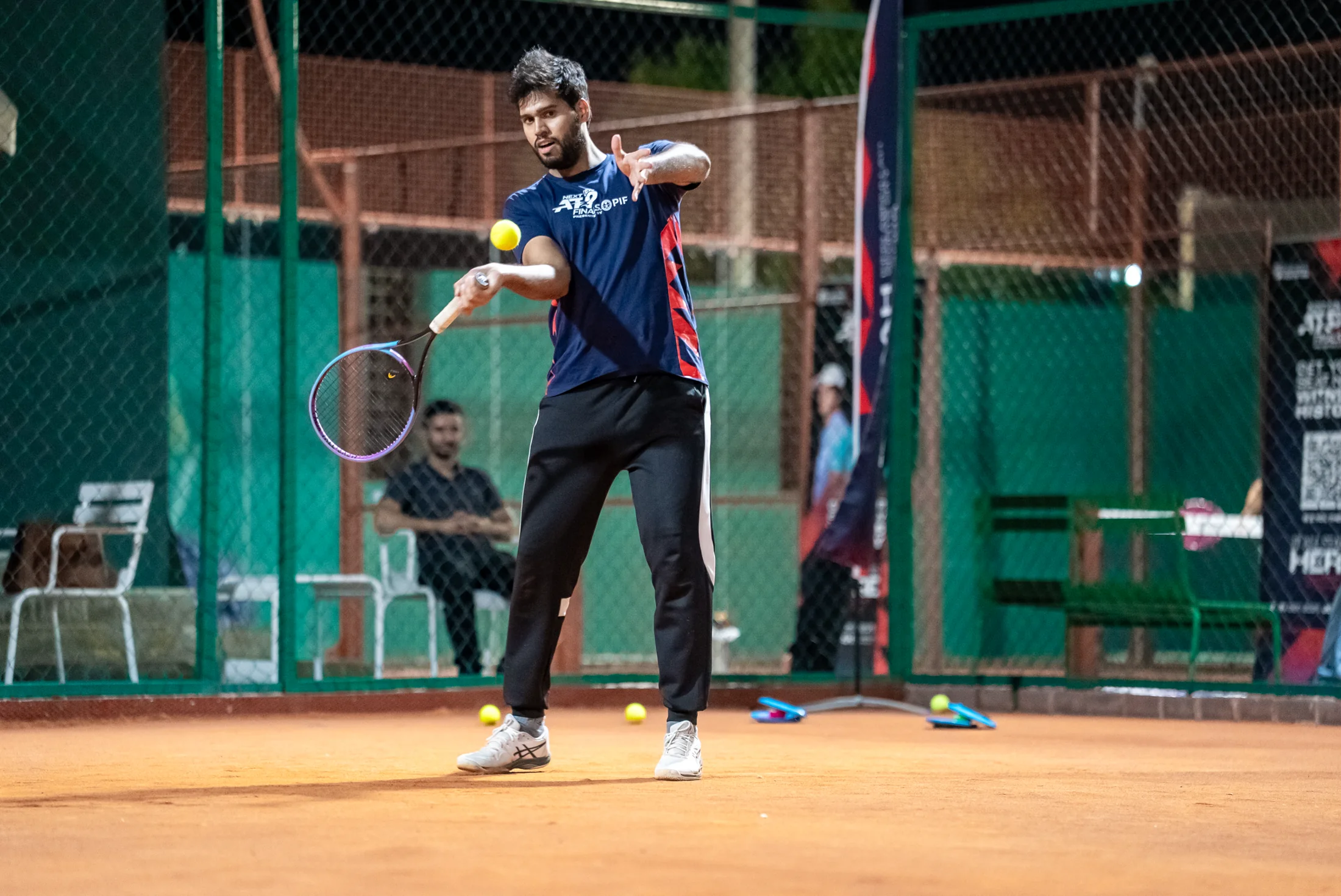
A slow ball gives you time, not permission to lose structure. Move forward, create spacing and attack a large target.
A slow ball gives you time, not permission to lose structure. Move forward, create spacing and attack a large target.
Recognise the opportunity early
The ball becomes difficult when you admire it and move late. Read the slower speed, begin moving forward and arrive before the ball drops below a comfortable contact height.
Keep adjustment steps alive
Extra time can make players stop their feet. Continue adjusting so the ball remains beside the body. A crowded easy ball is no longer easy.
Use margin over the net
Moving forward shortens the court, so the shot needs controlled shape. Aim through a safe window and accelerate with spin rather than flattening every ball toward the baseline.
Recover as an attacker
After a strong approach, expect a passing shot or lob. Move to a position that supports the next ball instead of watching whether the first attack becomes a winner.
Try this on court
Short-ball decision drill
Mix deep feeds with occasional short balls.
- Rally neutral balls cross-court.
- Call 'attack' as soon as a shorter ball is recognised.
- Move through a large target with controlled topspin.
- Recover forward and play the next shot.
Common questions
Questions players ask
Why do I miss easy balls more than fast balls?
A slower ball provides less incoming pace and more decision time, so players often over-swing, stop their feet or change their normal timing.
Should I hit a slow ball flat?
Not automatically. Controlled spin and a sensible target often produce a more reliable attack.
A guide can give you the right idea; individual feedback identifies which part matters for your game. Explore private tennis coaching in Riyadh or learn what happens in a first private tennis class.
Train with direction
Turn information into improvement.
Reading helps. Focused feedback helps faster. Hammad coaches adults and kids in English, with every session adapted to the player.